
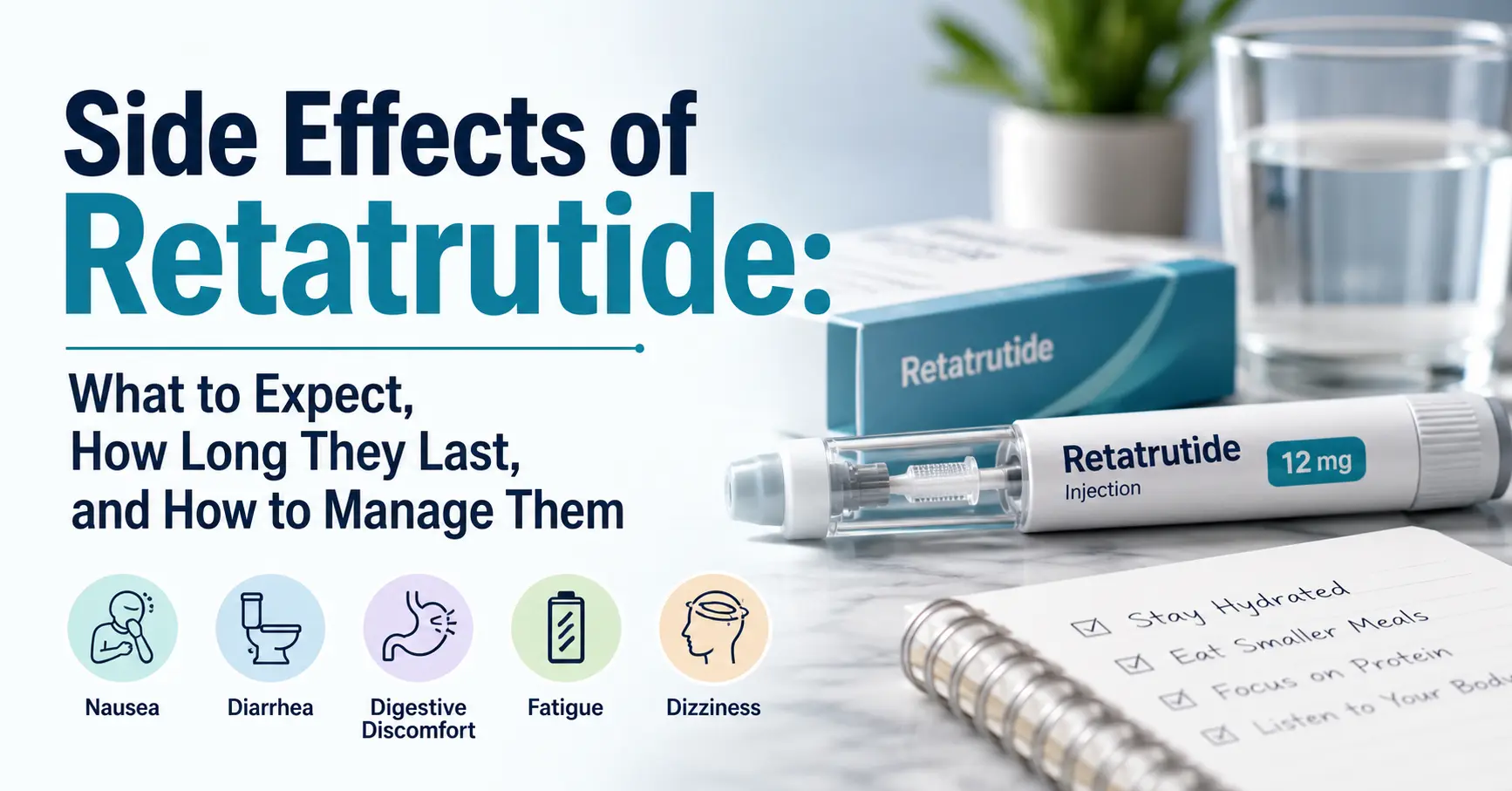
If you’re researching the side effects of retatrutide, chances are you’re considering it for weight loss or simply want to understand what to expect before starting treatment.
While retatrutide has gained attention for its potential impact on weight management, many people have questions about its safety profile and the symptoms they may experience along the way.
Like most medications that affect appetite, digestion, and metabolism, retatrutide can cause side effects.
The good news is that most are mild to moderate and tend to improve as your body adjusts.
Understanding which side effects are common, how long they typically last, and when to seek medical attention can help you feel more prepared and confident throughout the process.
GET HELP WITH YOUR WEIGHT LOSS JOURNEY
What Are the Side Effects of Retatrutide?
The most common side effects of retatrutide include:
- Nausea
- Diarrhea
- Vomiting
- Constipation
- Fatigue
- Reduced appetite
- Abdominal discomfort
- Indigestion
Most side effects occur during the first few weeks of treatment or after a dose increase.
For many people, symptoms become less noticeable over time.
Serious side effects are less common but can occur.
These may include severe dehydration, pancreatitis, or gallbladder complications.
Quick Answer
The most common side effects of retatrutide are nausea, diarrhea, vomiting, constipation, fatigue, and reduced appetite.
Most symptoms are mild to moderate and improve as the body adjusts, although some individuals may experience more significant gastrointestinal side effects during the early stages of treatment.
What Is Retatrutide and How Does It Work?
Retatrutide is a medication that targets three hormone receptors involved in appetite regulation, blood sugar control, and energy balance.
These include:
- GLP-1 (glucagon-like peptide-1)
- GIP (glucose-dependent insulinotropic polypeptide)
- Glucagon receptors
By activating all three pathways, retatrutide may influence hunger, calorie intake, digestion, and how the body uses energy.
While studies show these effects may contribute to significant weight loss, they can also lead to digestive symptoms, particularly during the early stages of treatment.
Why Does Retatrutide Cause Side Effects?
Many of the side effects associated with retatrutide are directly related to how it works.
One of its primary actions is slowing the rate at which food leaves the stomach.
This helps people feel full longer and often reduces appetite, but it can also cause symptoms such as nausea, bloating, or stomach discomfort.
The medication also affects hormone signaling throughout the digestive tract.
As the body adjusts to these changes, temporary gastrointestinal symptoms may develop.
For most people, side effects are strongest during the first few weeks and become more manageable over time.
Who Is More Likely to Experience Retatrutide Side Effects?
Not everyone responds to retatrutide in the same way.
Some people may be more likely to experience side effects, including those who:
- Have a history of digestive disorders
- Increase dosage quickly
- Eat large or high-fat meals
- Have experienced side effects with other GLP-1 medications
- Become dehydrated easily
- Consume insufficient protein or calories during weight loss
Even among people with similar health histories, individual responses can vary considerably.
Most Common Side Effects of Retatrutide
The majority of reported retatrutide side effects involve the digestive system.
Retatrutide Nausea
Nausea is often the most commonly reported retatrutide side effect.
Many people notice nausea shortly after beginning treatment or increasing their dose.
Symptoms may range from mild queasiness to a stronger feeling of stomach upset.
Common triggers include:
- Eating large meals
- High-fat foods
- Eating too quickly
- Overeating despite feeling full
How to Reduce Nausea
If nausea develops, consider:
- Eating smaller meals more frequently
- Choosing bland foods temporarily
- Avoiding greasy or fried foods
- Drinking water throughout the day
- Eating slowly and stopping when satisfied
For many individuals, nausea improves significantly within several weeks.
Diarrhea
Diarrhea is another common side effect of retatrutide.
Changes in digestion can increase stool frequency and lead to loose bowel movements, particularly during the adjustment phase.
While mild diarrhea is usually manageable, ongoing symptoms can increase the risk of dehydration.
Managing Diarrhea
Helpful strategies include:
- Drinking plenty of fluids
- Replacing electrolytes when needed
- Avoiding highly processed foods
- Limiting alcohol consumption
- Choosing easily digestible meals
Vomiting
Vomiting is less common than nausea but can occur, especially when treatment begins or doses are increased.
Because retatrutide slows stomach emptying, some individuals may feel overly full after meals, which can contribute to vomiting episodes.
Tips for Reducing Vomiting
- Avoid large portions
- Eat slowly
- Stay hydrated
- Choose lighter meals
- Stop eating when comfortably full
Constipation
Constipation may occur because digestion slows, allowing stool to remain in the intestines longer.
Symptoms can include:
- Infrequent bowel movements
- Hard stools
- Bloating
- Abdominal pressure
Managing Constipation
To support healthy digestion:
- Increase water intake
- Consume fiber-rich foods
- Stay physically active
- Maintain a consistent eating schedule
Fatigue
Fatigue is another commonly reported side effect.
People often describe feeling:
- Low energy
- Mental fog
- Reduced motivation
- Increased tiredness
How to Improve Energy Levels
- Prioritize protein intake
- Stay hydrated
- Get adequate sleep
- Maintain regular physical activity
- Avoid excessive calorie restriction
Reduced Appetite
A decrease in appetite is one of the intended effects of retatrutide.
Many people report:
- Feeling full sooner
- Less interest in snacking
- Fewer cravings
- Reduced portion sizes
While appetite suppression can support weight loss, consuming enough protein and nutrients remains essential.
Less Common Side Effects of Retatrutide
Although gastrointestinal symptoms receive the most attention, some people report additional side effects.
Headaches
Headaches may occur during the early stages of treatment.
They are often related to dehydration, reduced calorie intake, or rapid weight loss.
Dizziness
Some individuals experience lightheadedness or dizziness, particularly when eating less than usual or not consuming enough fluids.
Injection Site Reactions
Some people notice temporary redness, itching, swelling, or tenderness near the injection site.
Bloating and Indigestion
Changes in digestion may lead to temporary bloating, gas, or feelings of fullness after eating.
Can Retatrutide Cause Hair Loss?
Hair loss is not considered one of the primary side effects of retatrutide.
However, some people undergoing rapid weight loss notice increased hair shedding.
In many cases, the hair loss is related to:
- Significant calorie restriction
- Nutritional deficiencies
- Physiological stress from rapid weight loss
Maintaining adequate protein intake and balanced nutrition may help reduce this risk.
Can Retatrutide Cause Muscle Loss?
Any significant weight loss can lead to some degree of muscle loss if steps are not taken to preserve lean body mass.
To help minimize muscle loss:
- Prioritize protein intake
- Engage in resistance training
- Stay physically active
- Avoid overly aggressive calorie restriction
Maintaining muscle mass is important for long-term metabolic health and weight maintenance.
How Long Do Retatrutide Side Effects Last?
One of the most common questions people ask is how long retatrutide side effects last.
Week 1
- Nausea
- Reduced appetite
- Mild fatigue
- Digestive changes
Weeks 2–4
- Appetite suppression becomes more noticeable
- Diarrhea or constipation may occur
- Nausea often begins improving
Months 2–3
- Digestive symptoms frequently stabilize
- Energy levels often improve
- Weight loss may accelerate
Long-Term Use
Many individuals report fewer side effects as treatment continues and their body adapts.
Is Retatrutide Safe?
For most individuals, retatrutide appears to have a safety profile similar to other medications that affect GLP-1 and GIP pathways.
The majority of side effects are gastrointestinal and tend to improve with time.
However, every medication carries potential risks.
A healthcare provider can help determine whether retatrutide is appropriate based on your medical history, current medications, and weight loss goals.
At Philly Anti-Aging we take every precaution to ensure that your retatrutide treatment is as safe and effective as possbile.
SEE IF RETATRUTIDE IS RIGHT FOR YOU
Retatrutide vs Tirzepatide Side Effects
Retatrutide and tirzepatide share many similarities because they target overlapping hormone pathways.
Both commonly cause:
- Nausea
- Vomiting
- Diarrhea
- Constipation
- Reduced appetite
One difference is that retatrutide also activates the glucagon receptor, which may contribute to additional metabolic effects and potentially different tolerability for some individuals.
Retatrutide vs Semaglutide Side Effects
Retatrutide and semaglutide also share many side effects.
However, because retatrutide targets additional hormone receptors, some individuals report differences in appetite suppression, digestive symptoms, and weight loss responses.
Ultimately, individual tolerance varies, and one medication may feel easier to tolerate than another.
Rare but Serious Side Effects of Retatrutide
While uncommon, some symptoms require prompt medical attention.
Severe Dehydration
Symptoms may include:
- Dizziness
- Dry mouth
- Dark urine
- Weakness
Pancreatitis
Potential warning signs include:
- Severe abdominal pain
- Pain radiating to the back
- Persistent nausea and vomiting
Gallbladder Problems
Potential symptoms include:
- Upper abdominal pain
- Fever
- Nausea
- Pain after meals
Seek medical attention immediately if these symptoms occur.
How to Reduce Retatrutide Side Effects
Many side effects can be minimized through simple lifestyle adjustments.
Eat Smaller Meals
Large meals often worsen nausea and digestive discomfort.
Prioritize Protein
Protein helps preserve muscle mass and support energy levels.
Stay Hydrated
Hydration is especially important if diarrhea or vomiting occurs.
Avoid High-Fat Foods
Fatty foods commonly trigger digestive symptoms.
Exercise Regularly
Regular movement can support digestion, energy levels, and muscle retention.
Follow Your Treatment Plan Carefully
Gradual dose increases often improve tolerability and reduce gastrointestinal side effects.
When Should You Contact a Healthcare Provider?
You should contact a healthcare provider if you experience:
- Severe abdominal pain
- Persistent vomiting
- Severe diarrhea
- Signs of dehydration
- Difficulty eating or drinking
- Symptoms that continue worsening
Final Thoughts: Side Effects of Retatrutide
The most common side effects of retatrutide include nausea, diarrhea, vomiting, constipation, fatigue, and appetite suppression.
Most retatrutide symptoms are temporary and become easier to manage as the body adapts.
Understanding what causes these side effects, how long they may last, and how to reduce discomfort can help you feel more confident throughout your weight loss journey.
If symptoms become severe or interfere with daily life, a qualified healthcare provider like Philly Anti-Aging can help determine the most appropriate next steps based on your individual needs and health history.
FAQs: Side Effects of Retatrutide
How to avoid retatrutide side effects?
While it may not be possible to avoid all retatrutide side effects, many people can reduce them by eating smaller meals, avoiding high-fat foods, staying hydrated, increasing protein intake, and following their prescribed dosing schedule. Side effects are often more manageable when lifestyle habits support healthy digestion and nutrition.
How long does retatrutide take to work?
Many people notice appetite suppression and reduced hunger within the first few weeks of starting retatrutide. Weight loss results may begin to appear during the first month, although the timeline can vary based on dosage, lifestyle habits, and individual response. More significant changes are often seen over several months of consistent treatment.
How long can I stay on retatrutide?
The appropriate length of time to stay on retatrutide depends on your health goals, treatment response, and guidance from your healthcare provider. Some individuals may use it for an extended period to support ongoing weight management, while others may have different treatment plans based on their specific needs and medical history.
What should I avoid while on retatrutide?
While taking retatrutide, it may help to avoid large meals, high-fat foods, overeating, and excessive alcohol consumption, as these can worsen gastrointestinal side effects such as nausea, vomiting, and indigestion. It’s also important to stay hydrated and follow any dietary recommendations provided by your healthcare provider.
What are the benefits of retatrutide?
Retatrutide is designed to help regulate appetite, support weight loss, and improve metabolic function. Many people experience reduced hunger, fewer food cravings, increased feelings of fullness, and meaningful weight loss over time. Research has also shown potential benefits related to blood sugar control and overall metabolic health.