
If you’re considering retatrutide or have recently started treatment, you’re probably wondering: How long does retatrutide take to work?
The short answer is that many people notice reduced appetite within the first few weeks, but meaningful weight loss usually takes longer.
While some individuals see changes on the scale during the first month, most noticeable weight loss occurs over several months as the medication’s effects build and healthy lifestyle habits become established.
Understanding what to expect week by week can help you stay motivated and avoid the frustration that comes from expecting immediate results.
SEE IF RETATRUTIDE IS RIGHT FOR YOU
Quick Answer: How Long Does Retatrutide Take to Work?
Most people begin noticing appetite suppression and reduced food cravings within 1 to 4 weeks.
Early weight loss may start during the first month, while more noticeable results often appear after 8 to 12 weeks.
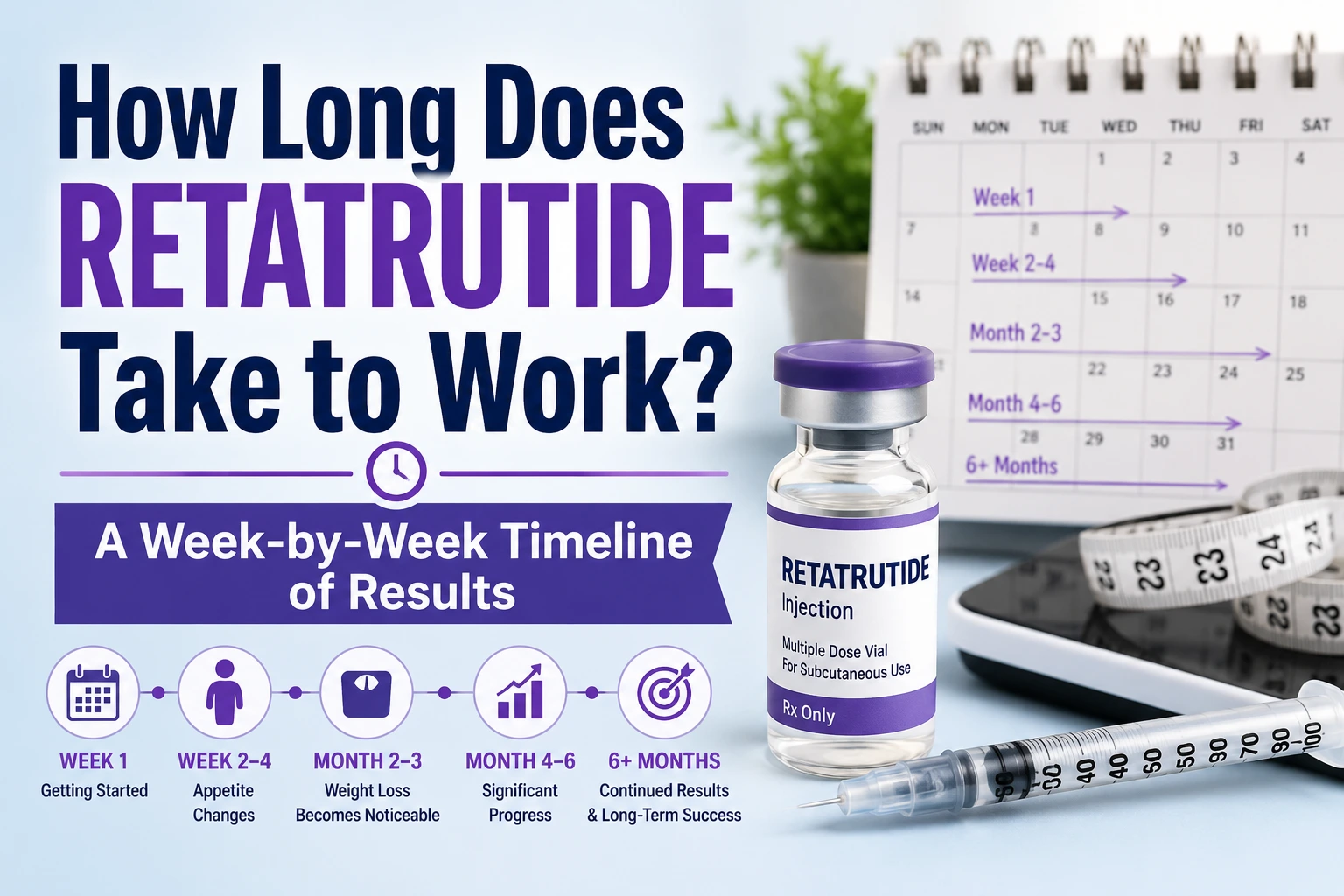
Here’s a general timeline:
| Timeline | What You May Notice |
| Week 1-2 | Reduced appetite, feeling full faster |
| Week 3-4 | Fewer cravings and better portion control |
| Month 2-3 | Consistent weight loss becomes noticeable |
| Month 4-6 | Significant progress for many individuals |
| 6+ Months | Continued weight loss and long-term improvements |
Everyone responds differently, so your timeline may vary.
How Does Retatrutide Work?
Retatrutide works by targeting multiple hormone pathways involved in hunger, fullness, blood sugar regulation, and energy balance.
These effects may help:
- Reduce appetite
- Increase feelings of fullness
- Slow stomach emptying
- Improve blood sugar control
- Support long-term fat loss
Because these changes occur gradually, retatrutide is not designed to produce overnight weight loss.
Instead, it helps create the conditions that make sustained weight management easier over time.
Week 1: Does Retatrutide Work Immediately?
One of the most common questions people ask is whether retatrutide starts working immediately.
The medication begins interacting with your body’s hormone pathways shortly after administration, but that doesn’t necessarily mean you’ll notice major changes right away.
During the first week, some people report:
- Feeling full sooner during meals
- Reduced interest in snacking
- Less frequent hunger between meals
- Subtle changes in food cravings
Others notice very little at first, especially if they’re starting at a lower dose.
This is normal and doesn’t mean the medication isn’t working.
Weeks 2-4: When Appetite Changes Become More Noticeable
Studies show for many people, the first month is when appetite suppression starts becoming more obvious.
You may notice:
- Less hunger throughout the day
- Better control around food
- Fewer cravings for sweets or processed foods
- Smaller portion sizes without feeling deprived
Some individuals begin losing weight during this stage, while others mainly notice behavioral changes that eventually contribute to weight loss later.
This is often where people start asking, “Is retatrutide working?” even if the scale hasn’t moved significantly yet.
The reality is that appetite changes frequently appear before visible weight loss.
Why Am I Not Losing Weight Yet?
If you’re several weeks into treatment and haven’t seen dramatic weight loss, you’re not alone.
Several factors influence how quickly results appear, including:
- Starting weight
- Dosage schedule
- Diet quality
- Physical activity levels
- Sleep habits
- Stress levels
- Individual metabolism
Many people focus solely on the number on the scale, but early signs that retatrutide may be working include:
- Eating less without trying
- Feeling satisfied after smaller meals
- Reduced cravings
- Less emotional eating
- Improved control around food
These changes often happen before significant weight loss becomes visible.
How Much Weight Can You Lose in the First Month?
Weight loss results vary considerably from person to person.
Some individuals lose several pounds during their first month, while others experience slower progress.
The first month often focuses on helping the body adjust to treatment and building healthier eating habits.
Rather than comparing your results to someone else’s, it’s more helpful to look for steady improvements in appetite control and consistency.
Long-term success is rarely determined by what happens during the first few weeks.
Months 2-3: When Most People Start Seeing Results
The second and third months are often when people begin noticing meaningful changes.
By this stage, many individuals report:
- More consistent weight loss
- Better energy levels
- Improved confidence
- Looser-fitting clothes
- Reduced waist measurements
This is also when friends and family may start noticing physical changes.
For many people, months two and three represent the point where the early appetite benefits begin translating into visible body composition changes.
Month 4-6: Significant Weight Loss for Many Individuals
By months four through six, the cumulative effects of appetite regulation, portion control, and lifestyle improvements often become much more apparent.
Potential benefits during this stage include:
- Greater total weight loss
- Improved body composition
- Better eating habits
- Increased physical activity
- Improved overall health markers
Many individuals find that healthy eating feels more sustainable because they no longer feel driven by constant hunger.
How Long Does Retatrutide Take to Work for Weight Loss?
This question is slightly different from asking when retatrutide starts working.
Appetite suppression and weight loss are not always the same thing.
Many people experience appetite changes within the first few weeks, while noticeable weight loss may take 8 to 12 weeks or longer.
In other words:
- Retatrutide may start affecting appetite within days or weeks.
- Visible weight loss often requires several weeks or months.
Understanding this distinction can help set realistic expectations.
What Factors Affect How Fast Retatrutide Works?
Let’s take a look at what can affect how fast retatrutide will work for you:
Starting Weight
Individuals with higher starting weights may notice larger early changes.
Dosage Progression
Many treatment plans gradually increase dosage over time, which can influence when results become more noticeable.
Nutrition
The medication can make healthy eating easier, but food choices still matter.
A diet rich in:
- Lean protein
- Vegetables
- Fiber
- Whole foods
can support better long-term outcomes.
Physical Activity
Regular exercise can help preserve muscle mass and improve overall results.
Sleep and Stress
Poor sleep and chronic stress can affect hunger hormones and make weight loss more challenging.
How to Maximize Your Results
If your goal is to support healthy weight loss, several habits can help maximize your progress.
Prioritize Protein
Protein helps maintain muscle mass and may improve satiety.
Stay Hydrated
Proper hydration can support overall health and help manage hunger.
Get Quality Sleep
Aim for seven to nine hours of sleep per night whenever possible.
Stay Consistent
Consistency tends to produce better long-term outcomes than trying to accelerate results through extreme dieting.
Be Patient
Weight loss medications often produce gradual progress rather than dramatic overnight transformations.
When Should You Contact a Medical Provider?
If you’ve been following your treatment plan consistently and have concerns about your progress, it’s always a good idea to discuss them with your healthcare provider.
They can evaluate factors such as:
- Dosage adjustments
- Nutrition habits
- Physical activity levels
- Underlying health conditions
- Overall treatment expectations
Personalized guidance can help ensure you’re on the right track.
How Philly Anti-Aging Can Help With Retatrutide
At Philly Anti-Aging, we understand that successful weight management requires more than simply focusing on the number on the scale.
Our team works with patients throughout Philadelphia to develop individualized wellness strategies like retatrutide designed to support healthy, sustainable results.
We take the time to understand your goals, monitor your progress, and help you create a plan that fits your lifestyle.
Final Thoughts: How Long Does Retatrutide Take to Work
So, how long does retatrutide take to work?
Many people notice reduced appetite and fewer food cravings within the first few weeks.
Early weight loss may begin during the first month, but more noticeable results often appear after 8 to 12 weeks.
Significant progress typically develops over several months as appetite regulation, healthier habits, and consistency work together.
If you’re just getting started, remember that early appetite changes are often the first sign of progress.
The scale may take a little longer to catch up, but long-term success is usually built through steady, sustainable improvements rather than rapid overnight changes.
FAQs: How Long Does Retatrutide Take to Work
Does Retatrutide Work Right Away?
Retatrutide begins affecting hormone pathways involved in hunger and fullness shortly after administration, but most people do not notice dramatic results immediately. Some individuals experience reduced appetite within the first week or two, while others may take several weeks before noticing significant changes.
What to Expect in Week 1 of Retatrutide?
During the first week, you may notice feeling fuller sooner, reduced hunger between meals, and fewer cravings. Some people experience no obvious changes initially, especially when starting at a lower dose. It’s normal for the medication’s effects to build gradually over time.
How to Get the Best Results From Retatrutide?
The best results typically come from combining treatment with healthy lifestyle habits. Focus on eating enough protein, staying hydrated, exercising regularly, getting adequate sleep, and following your treatment plan consistently. Long-term success is often the result of steady habits rather than quick fixes.
Does Retatrutide Burn Fat?
Retatrutide supports weight loss by helping regulate appetite, increase feelings of fullness, and improve metabolic function. As your body creates a calorie deficit and loses weight, fat loss may occur. However, the medication does not directly “burn fat” in the same way exercise increases calorie expenditure.
What Not to Eat When Taking Retatrutide?
There are no specific foods that everyone must avoid, but many people find that highly processed foods, fried foods, sugary snacks, and large portions can make it harder to achieve their weight loss goals. Prioritizing lean proteins, vegetables, fruits, and fiber-rich foods may help support better results.
How Do You Feel on Retatrutide?
Experiences vary, but many people report feeling less hungry, fuller after meals, and more in control of their eating habits. Some individuals also notice increased confidence and motivation as they begin seeing progress. Mild digestive side effects may occur during the adjustment period.
Can You Build Muscle on Retatrutide?
Yes, it is possible to build or maintain muscle while using retatrutide, especially when combining treatment with resistance training and adequate protein intake. Preserving muscle mass is an important part of healthy weight loss and can help support long-term metabolic health.
What Are the Benefits of Retatrutide vs Tirzepatide?
Retatrutide and tirzepatide both help with weight loss and appetite control, but retatrutide targets an additional hormone pathway. This extra mechanism may help increase calorie burning and support greater weight loss for some individuals. Both can reduce hunger and support long-term weight management when combined with healthy lifestyle habits.