
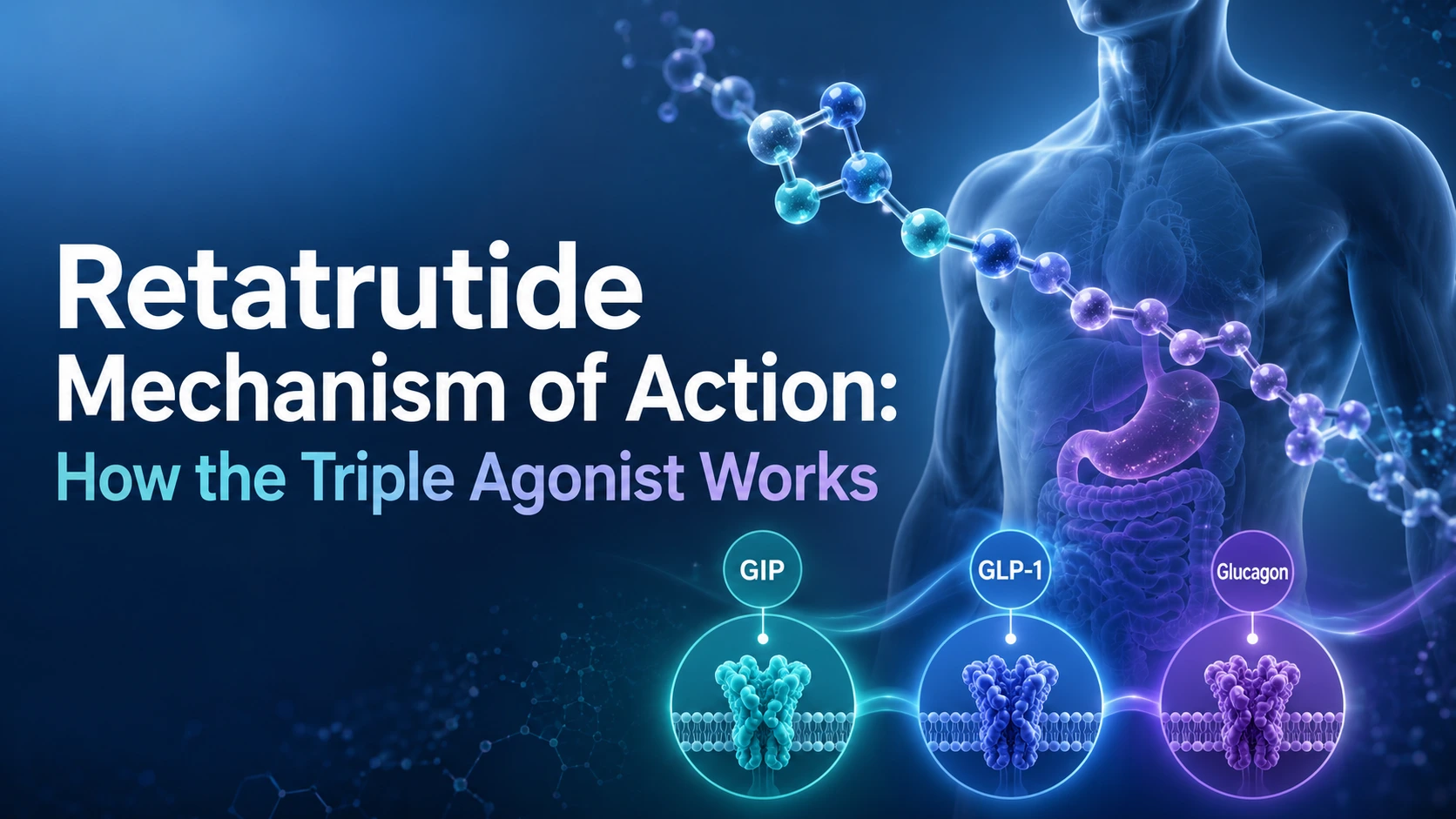
Retatrutide has gained attention because of the way it works in the body.
Instead of targeting one hormone pathway, it activates three receptors involved in appetite, blood sugar, insulin response, energy use, and fat metabolism.
The retatrutide mechanism of action is based on three receptor targets: GIP, GLP-1, and glucagon.
This is why retatrutide is often described as a triple hormone receptor agonist or triple agonist.
Its design is different from single-pathway GLP-1 medications and dual-pathway medications because it combines three metabolic signals into one molecule.
For people researching medical weight management, metabolic health, or next-generation peptide-based therapies in Philadelphia, understanding how retatrutide works can make the science easier to follow.
Here is a clear breakdown of what each receptor does, how the pathways work together, and why the triple-action approach matters.
SEE HOW RETATRUTIDE CAN HELP YOUR WEIGHT LOSS JOURNEY
Quick Answer: How Does Retatrutide Work?
Retatrutide works by activating three metabolic hormone receptors: GIP, GLP-1, and glucagon.
These pathways may influence appetite, fullness, insulin response, blood sugar regulation, energy expenditure, and fat metabolism.
The simplest way to understand it is this:
Retatrutide → GIP + GLP-1 + glucagon receptors → appetite regulation, insulin response, glucose control, energy use, and fat metabolism.
That triple-receptor activity is what separates retatrutide from therapies that target only GLP-1 or both GLP-1 and GIP.
Key Takeaways
Retatrutide is called a triple agonist because it activates three receptors: GIP, GLP-1, and glucagon.
GLP-1 receptor activation is linked to appetite regulation, fullness, slower gastric emptying, and glucose-dependent insulin release.
GIP receptor activation may support insulin response, nutrient handling, and broader metabolic signaling.
Glucagon receptor activation may influence energy expenditure, liver metabolism, and fat-related pathways.
The goal of the triple-receptor approach is to affect multiple parts of metabolism at the same time instead of focusing on one pathway alone.
What Is Retatrutide?
Retatrutide, also known as LY3437943, is a peptide-based medication studied for its effects on weight, blood sugar regulation, and metabolic health.
It is called a triple hormone receptor agonist because it activates three hormone receptors:
- GIP receptor
- GLP-1 receptor
- Glucagon receptor
Each receptor plays a different role in metabolism.
GLP-1 and GIP are incretin hormones, which means they help the body respond to food intake, especially by supporting insulin release when blood sugar rises.
Glucagon has a different role and is involved in energy balance, liver metabolism, and how the body uses stored fuel.
The main idea behind retatrutide is simple: it is designed to influence several metabolic signals at once instead of focusing on only one pathway.
What Is the Retatrutide Mechanism of Action?
The retatrutide mechanism of action involves activating GIP, GLP-1, and glucagon receptors.
These receptors help regulate how the body responds to food, stores and uses energy, controls appetite, and manages blood sugar.
In plain English, retatrutide works through three hormone pathways:
GLP-1 signaling may help reduce appetite, increase fullness, slow stomach emptying, and support glucose-dependent insulin release.
GIP signaling may support insulin response, influence nutrient handling, and play a role in metabolic regulation.
Glucagon receptor signaling may affect energy expenditure, liver metabolism, and the way the body uses stored energy.
Together, these pathways may help explain why retatrutide is being studied for weight reduction, glucose control, and broader metabolic health.
Single Agonist vs Dual Agonist vs Triple Agonist
To understand what makes retatrutide different, it helps to compare single, dual, and triple agonist mechanisms.
A single agonist targets one receptor pathway.
For example, a GLP-1 receptor agonist focuses mainly on the GLP-1 pathway, which is closely tied to appetite, satiety, gastric emptying, and insulin response.
A dual agonist targets two receptor pathways.
Tirzepatide, for example, activates both GIP and GLP-1 receptors.
A triple agonist targets three receptor pathways.
Retatrutide activates GIP, GLP-1, and glucagon receptors, which gives it a broader mechanism involving appetite, insulin response, blood sugar regulation, energy expenditure, and lipid metabolism.
That third receptor target, glucagon, is one of the main reasons retatrutide is discussed differently from GLP-1-only and dual-pathway therapies.
How GLP-1 Receptor Activation Works
GLP-1 stands for glucagon-like peptide-1.
It is one of the best-known hormone pathways in medical weight management and metabolic health.
When the GLP-1 receptor is activated, several things may happen:
- It may help increase satiety, which means you feel full sooner
- It may reduce appetite and food intake
- It may slow gastric emptying, meaning food leaves the stomach more slowly
- It may support insulin release when blood sugar is elevated
- It may help regulate glucagon activity after meals
This matters because appetite, fullness, and blood sugar response are closely connected.
When GLP-1 signaling is stronger, many people feel less driven by hunger and may find it easier to feel satisfied with smaller portions.
In the context of retatrutide, GLP-1 is only one part of the mechanism.
Retatrutide also activates GIP and glucagon receptors, which expands the way it may affect metabolic function.
How GIP Receptor Activation Works
GIP stands for glucose-dependent insulinotropic polypeptide.
Like GLP-1, it is an incretin hormone.
That means it helps the body respond to nutrients after eating.
GIP receptor activation is mainly associated with glucose-dependent insulin secretion.
In simple terms, when blood sugar rises after a meal, GIP can help the pancreas release insulin in a more meal-responsive way.
GIP may also play a role in:
- Fat metabolism
- Energy storage
- Appetite regulation
- Insulin sensitivity
- How the body handles nutrients after eating
For years, GLP-1 received most of the attention in medical weight management.
Newer therapies have brought more focus to GIP because it may work alongside GLP-1 in a complementary way.
With retatrutide, GIP is part of the triple mechanism.
It may help support insulin response and metabolic signaling while GLP-1 affects appetite and fullness.
How Glucagon Receptor Activation Works
The glucagon receptor is one of the most interesting parts of the retatrutide mechanism of action.
Glucagon is often discussed in relation to blood sugar because it can signal the liver to release glucose.
But glucagon biology is more complex than that.
Glucagon receptor activation is also involved in energy balance, lipid metabolism, and how the body uses fuel.
In the context of retatrutide, glucagon receptor activation is being studied for its potential role in:
- Energy expenditure
- Fat metabolism
- Liver-related metabolic pathways
Body weight regulation when balanced with GLP-1 and GIP activity
This is where retatrutide differs from many other metabolic therapies.
The goal is not simply to activate glucagon by itself.
The idea is that glucagon receptor activity may be balanced by GLP-1 and GIP receptor activity, creating a broader metabolic effect.
That balance matters.
GLP-1 and GIP help support insulin and appetite-related pathways, while glucagon may contribute more to energy use and fat-related metabolism.
Retatrutide vs Semaglutide vs Tirzepatide: Mechanism Comparison
Retatrutide is often compared to semaglutide and tirzepatide because all three are discussed in the context of weight and metabolic health.
The key difference is the number of receptor pathways involved.
Semaglutide focuses on GLP-1.
Tirzepatide combines GIP and GLP-1.
Retatrutide adds glucagon receptor activity to the GIP and GLP-1 framework.
| Medication | Receptor Targets | Main Mechanism Focus | What Makes It Different |
| Semaglutide | GLP-1 receptor | Appetite, fullness, gastric emptying, and glucose-dependent insulin release | Targets one primary incretin pathway |
| Tirzepatide | GIP and GLP-1 receptors | Insulin response, appetite regulation, and metabolic signaling | Targets two incretin pathways |
| Retatrutide | GIP, GLP-1, and glucagon receptors | Appetite, glucose response, insulin signaling, energy expenditure, and fat metabolism | Targets three metabolic hormone pathways |
This comparison helps explain why retatrutide is often described as a next-generation triple agonist.
It is not just another GLP-1.
It is designed to work through three separate but connected metabolic pathways.
SEE WHICH WEIGHT LOSS OPTION IS RIGHT FOR YOU
How Retatrutide May Affect Appetite
One of the main reasons people search for how retatrutide works is to understand its effect on appetite.
GLP-1 receptor activation can increase satiety signals, making the brain register fullness sooner.
It may also slow stomach emptying, which can make meals feel more satisfying for longer.
These effects may reduce the urge to snack, overeat, or feel constantly hungry.
GIP may also play a role in appetite and nutrient handling, although its effects are often discussed more in relation to insulin and metabolism.
Retatrutide’s appetite-related effects are likely tied strongly to GLP-1 signaling, but the full mechanism includes all three receptors working together.
How Retatrutide May Affect Blood Sugar and Insulin
Retatrutide affects pathways involved in blood sugar control.
GLP-1 and GIP both support glucose-dependent insulin secretion.
That means they help the body release insulin in response to elevated blood sugar, especially after eating.
This is different from simply forcing insulin release at all times.
This matters because insulin is one of the body’s main hormones for moving glucose out of the bloodstream and into cells where it can be used or stored.
When insulin signaling and blood sugar response are not working well, weight, energy, hunger, and metabolic health can all be affected.
Because blood sugar regulation is complex, this is one reason medical supervision and lab monitoring matter when discussing any metabolic therapy.
How Retatrutide May Affect Energy Expenditure
The glucagon receptor is the part of retatrutide that most directly connects to energy expenditure.
Energy expenditure refers to how much energy the body uses.
This includes basic functions like maintaining body temperature and organ function, as well as movement, exercise, digestion, and metabolic processes.
Glucagon receptor activation may influence how the body uses stored energy and processes fat.
When paired with GLP-1 and GIP receptor activity, this may help explain why retatrutide has produced notable body-weight changes in clinical studies.
This does not mean retatrutide simply “speeds up metabolism” in a basic or unlimited way.
A more accurate explanation is that it affects several metabolic pathways related to appetite, nutrient handling, energy balance, and fat metabolism.
How Retatrutide May Affect Fat Metabolism
Retatrutide’s effect on fat metabolism may come from more than one pathway.
GLP-1 may reduce food intake by improving satiety.
GIP may influence how the body handles nutrients and stores energy.
Glucagon receptor activity may affect lipid metabolism and energy use.
Together, these effects may contribute to changes in body weight, waist circumference, and metabolic markers seen in research.
The important point is that fat loss is not caused by one isolated action.
Retatrutide’s mechanism appears to involve several connected systems, including appetite regulation, insulin response, energy balance, and lipid metabolism.
What Research Suggests So Far
Research on retatrutide has focused on obesity, type 2 diabetes, and related metabolic outcomes.
In clinical studies, retatrutide has been associated with dose-related changes in body weight and metabolic markers.
This has led to interest in how its triple-receptor mechanism may affect appetite, insulin response, blood sugar regulation, energy expenditure, and fat metabolism.
These findings help explain why the mechanism is receiving so much attention.
Retatrutide is not being studied only for appetite suppression.
It is being studied because its triple-receptor activity may affect several parts of metabolic health at once.
Possible Side Effects Related to the Mechanism
Because retatrutide affects hormone pathways involved in digestion and metabolism, side effects can be connected to those same systems.
The most commonly discussed side effects in studies are gastrointestinal, including symptoms such as:
- Nausea
- Diarrhea
- Vomiting
- Constipation
- Reduced appetite
- Stomach discomfort
These effects are similar to those discussed with other incretin-based therapies, especially when the body is adjusting to changes in appetite, digestion, and gastric emptying.
Other factors may also matter, including:
- Medical history
- Current medications
- Blood sugar patternsHeart rate and blood pressure
- Digestive health
- Hydration and nutrition
- Dose changes
That is why any conversation about metabolic therapy should include a full health review, appropriate lab work, and ongoing clinical oversight.
Why Medical Guidance Matters
Understanding the retatrutide mechanism of action is helpful, but it is not a substitute for personalized medical care.
Metabolic health is highly individual.
Two people can have the same weight or BMI and have very different insulin levels, hormone patterns, appetite signals, muscle mass, inflammation markers, sleep quality, stress levels, and medical histories.
A medically guided approach looks at the whole picture, not just one medication or one pathway.
For people in Philadelphia who are researching weight management, hormone optimization, or metabolic health support, Philly Anti-Aging focuses on education, evaluation, and a better understanding of the factors that may be affecting energy, body composition, and long-term wellness.
Retatrutide Mechanism of Action: The Bottom Line
Retatrutide works by activating three metabolic hormone receptors: GIP, GLP-1, and glucagon.
That triple-receptor activity may affect:
- Appetite
- Fullness
- Gastric emptying
- Insulin response
- Blood sugar regulation
- Energy expenditure
- Fat metabolism
- Body weight
The main difference between retatrutide and other incretin-based therapies is that retatrutide targets three pathways instead of one or two.
GLP-1 helps with appetite and glucose-related signaling.
GIP supports insulin and metabolic response.
Glucagon may contribute to energy expenditure and lipid metabolism.
That is the core of the retatrutide mechanism of action: a multi-pathway approach to metabolic regulation.
FAQs: Retatrutide Mechanism of Action
What is the mechanism of action of retatrutide?
The mechanism of action of retatrutide is triple-receptor activation. It activates GIP, GLP-1, and glucagon receptors, which are involved in appetite control, insulin response, blood sugar regulation, energy expenditure, and fat metabolism.
How does retatrutide work for weight loss?
Retatrutide may support weight loss by affecting several metabolic pathways at once. GLP-1 activity may reduce appetite and increase fullness. GIP activity may support insulin and nutrient handling. Glucagon receptor activity may influence energy expenditure and fat metabolism.
What three receptors does retatrutide target?
Retatrutide targets the GIP receptor, GLP-1 receptor, and glucagon receptor. This is why it is called a triple agonist.
Is retatrutide a GLP-1?
Retatrutide includes GLP-1 receptor activity, but it is not only a GLP-1 receptor agonist. It also activates GIP and glucagon receptors, making it a triple hormone receptor agonist.
How is retatrutide different from semaglutide?
Semaglutide targets the GLP-1 receptor. Retatrutide targets GLP-1, GIP, and glucagon receptors. That means retatrutide works through three metabolic hormone pathways instead of one.
How is retatrutide different from tirzepatide?
Tirzepatide activates GIP and GLP-1 receptors. Retatrutide activates GIP, GLP-1, and glucagon receptors. The added glucagon receptor activity is one of the main differences between the two mechanisms.
Does retatrutide increase metabolism?
Retatrutide may influence energy expenditure through glucagon receptor activity, but it is more accurate to say it affects multiple metabolic pathways rather than simply “increasing metabolism.” Its effects involve appetite, insulin response, blood sugar regulation, energy balance, and fat metabolism.
How does retatrutide affect insulin?
Retatrutide activates GLP-1 and GIP receptors, both of which can support glucose-dependent insulin secretion. This means insulin release is tied to elevated blood sugar, especially after meals.
Why is retatrutide called a triple agonist?
Retatrutide is called a triple agonist because it activates three receptors: GIP, GLP-1, and glucagon. These three pathways are involved in appetite, insulin response, glucose control, energy use, and fat metabolism.